
4 Signs That You Might Need Prenatal & Postpartum Couples Therapy
Having a baby changes a relationship in ways most couples never anticipate. When resentment builds, arguments escalate, emotional connection drops or both partners feel unsupported, that is a sign the transition has moved beyond normal adjustment into something worth addressing together in prenatal or postpartum couples counseling.
Most couples expect a baby to bring them closer. What they do not expect is the distance that grows without either person choosing it and arguments that seem to be about logistics, but feel like something much bigger. If you and your partner have been feeling more like co-managers than partners since the baby arrived, you are not alone and this does not mean the relationship is failing.
Research published in peer-reviewed journals confirms that precipitous drops in relationship satisfaction occur in up to 70% of couples after birth, with nearly one in three partners falling into the clinical range of relationship distress within the first 18 months (Gottman et al., 2002; Cowan & Cowan, 2000). This is a reflection of how hard this transition is.
Here are four signs it may be worth addressing together in couples therapy.
1. Persistent Resentment
A common challenge many new parents face is the shift of focus to the baby after childbirth. Many non-birthing partners feel neglected and rejected as the birthing partner's attention shifts to the baby.
This sudden shift can trigger unexpressed feelings of jealousy and rejection. These emotions can be difficult to express due to shame and guilt, and can show up as irritability or withdrawal. When these feelings are left unexpressed, they build into resentment and place strain on the relationship.
What I see most often in the therapy room is a non-birthing partner who has been holding resentment silently for weeks, sometimes months, because they feel ashamed of having it at all. They love their baby and they love their partner. The resentment does not make sense to them, so they do not say it out loud. By the time it surfaces, it usually sounds like a complaint about dishes or bedtime routines. It is never actually about the dishes.
In my experience, the couples who name the resentment early, before it hardens into a fixed story about who their partner is, are the ones who move through this period with the least lasting damage to the relationship.
2. Frequent Arguments and Communication Breakdowns
After having a baby, chores and parenting responsibilities can strain relationships in ways couples do not anticipate. Perception of unequal effort, hormonal changes and lack of sleep can leave couples feeling overwhelmed.
Exhaustion reduces intimacy and sparks conflict. Over time couples find themselves caught in a cycle of conflict because they feel unheard and unsupported. The communication skills that once worked between them stop landing the same way.
What looks like a communication problem is almost always a proximity problem. Both people are too depleted to reach for each other, so the reaching stops and the silence gets interpreted as not caring.
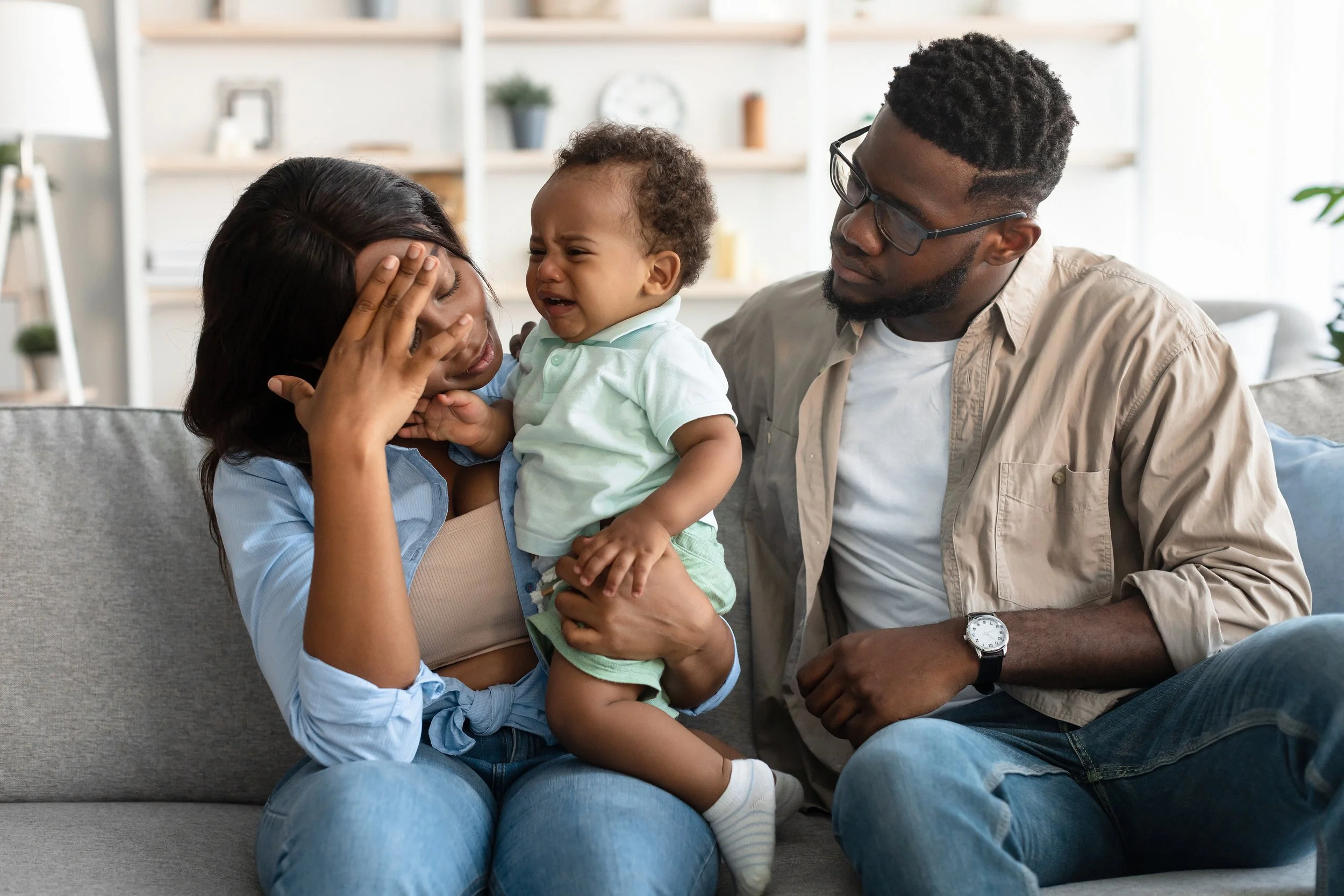
3. Feeling Emotionally and Physically Disconnected
Many couples experience emotional and physical disconnection after having a baby. Conditions like postpartum depression can affect mood and relationship quality for new parents. According to the Mayo Clinic, postpartum depression impacts emotional wellbeing and relationships for both parents. Postpartum Support International offers resources specifically for couples experiencing postpartum mental health challenges together.
Sleep deprivation is one of the most common contributors to postpartum relationship strain. Physical recovery from birth can be particularly demanding and the other partner can feel helpless and unsure how to provide emotional support.
Postpartum depression does not just affect the person diagnosed. It changes the relational environment both people are living inside, which is why addressing it as a couple rather than as an individual problem produces better outcomes. If this pattern sounds familiar, there is more on how PPD and relationship strain feed each other in Your Relationship Is Making the Postpartum Depression Worse.
Over time a quiet distance grows and couples find themselves feeling lonely even in the same room. This is one of the most common patterns I work with through prenatal and postpartum couples counseling.
4. Lack of Support
Feeling unsupported after having a baby can be overwhelming. Between caring for the baby and managing the household, couples can feel like they are carrying the weight of the world alone.
Partner support during pregnancy and postpartum plays a critical role in maternal wellbeing and recovery. Guidance from the American College of Obstetricians and Gynecologists highlights the importance of partner involvement in supporting physical and emotional health during pregnancy.
The couples I work with who feel most unsupported are rarely with partners who do not care. They are with partners who do not know what is needed and are too exhausted to ask. That gap, between what one person needs and what the other knows to give, is exactly what postpartum couples counseling addresses.
Feelings of loneliness are amplified because they arrive at the exact moment partners need each other most. Virtual prenatal and postpartum couples therapy across Minnesota gives both people a place to close that gap together, without having to figure it out alone.
If you recognized yourself in any of these signs, that is enough.
Most couples who come to prenatal or postpartum couples counseling say the same thing afterward, they wish they had come sooner. Not because things were catastrophic, but because the distance was already building and nobody had named it yet.
Naming it is the first thing I do. Through the Re|Pair™ Framework, I work with couples virtually across Minnesota to understand what is driving the disconnection and close it before it becomes the new normal.
Frequently Asked Questions About Prenatal and Postpartum Couples Counseling
-
Couples therapy during the first baby is not only normal — it is one of the most practical things partners can do for their relationship. The transition into parenthood is one of the highest-stress periods a couple goes through, and most people go into it with no preparation for what it does to the relationship dynamic. Therapy gives both people a place to name what is shifting before the distance becomes harder to close.
-
Prenatal counseling for couples focuses on the relationship changes that come with pregnancy and early parenthood, not just individual mental health. It helps partners talk through expectations, communication patterns, and how to support each other through a transition that affects both people. Most couples who start before the baby arrives are better prepared for the emotional and relational shifts that follow.
-
Warning signs include persistent sadness or anxiety, emotional withdrawal, difficulty bonding with the baby, irritability that feels out of proportion, and increased conflict in the relationship. When these symptoms affect daily functioning or how you and your partner are connecting, speaking with a mental health professional is worth considering. Postpartum Support International offers free resources and a helpline at 1-800-944-4773 for individuals and couples navigating postpartum mental health challenges
-
It depends on the provider and your plan. Many insurance plans cover individual therapy but not couples therapy specifically, since couples therapy is not billed as treatment for a diagnosed condition. At ForwardUs Counseling, sessions are private pay. Many clients use HSA or FSA funds, or request a superbill to submit for potential out-of-network reimbursement. The best way to confirm your coverage is to call the member services number on your insurance card. description.
